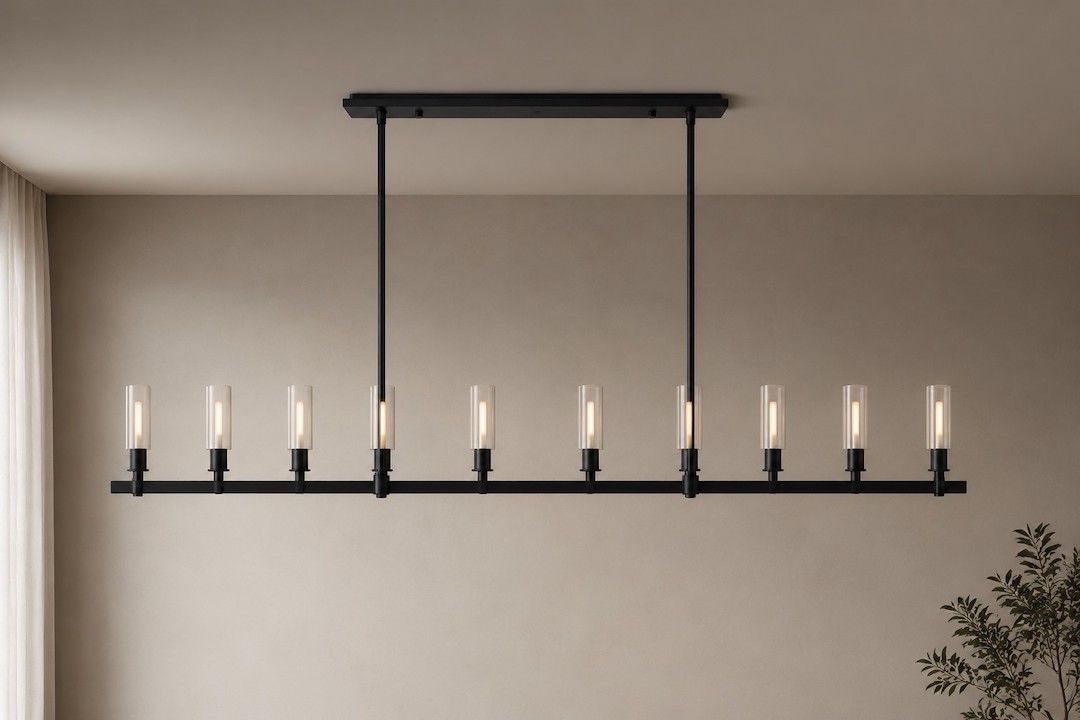
So, you’re wondering what an “Elegant Low Glare Black Iron Linear Chandelier” is all about? Simply put, it’s a lighting fixture designed to be a stylish, understated, and functional center-piece for your room. Think sleek black iron, a long, linear form, and lighting that brightens your space without assaulting your eyes. It’s a great choice for dining tables, kitchen islands, or even longer hallways where you want a modern touch and a comfortable ambiance.
Why Choose a Linear Chandelier?
Linear chandeliers Akahome are fantastic because they spread light evenly over a specific area. Unlike a traditional round chandelier that might create a bright spot in the center of a table and shadows at the ends, a linear design ensures consistent illumination along its entire length. This is particularly useful for dining, working, or any activity that benefits from well-distributed light.
The “Black Iron” Appeal
Black iron brings a certain grounded elegance to a space. It’s a classic material that pairs beautifully with a huge range of interior styles, from industrial and farmhouse to modern minimalist and even some transitional aesthetics. It’s durable, timeless, and offers a strong visual anchor without being overly ornate.
What Does “Low Glare” Really Mean?
This is where the magic happens for your eyes. “Low glare” means the light source is designed to minimize harshness and uncomfortable brightness. This can be achieved through several methods, like diffusers, recessed bulbs, or a careful selection of LED technology. The goal is to provide ample light for tasks and ambiance, without making you squint or creating distracting reflections.
When we talk about “elegant” in the context of this chandelier, we’re looking at a blend of clean lines, thoughtful proportions, and a sophisticated finish. It’s not about being flashy or ornate; it’s about refined simplicity.
The Power of Simplicity
Elegant design often stems from removing the unnecessary. A black iron linear chandelier, particularly one with a low-glare feature, typically boasts a minimalist aesthetic. This means:
- Clean Lines: Expect straight lines and geometric shapes rather than intricate curves or excessive ornamentation. This simplicity allows the fixture to blend seamlessly into various décor schemes while still making a statement.
- Uncluttered Form: The overall silhouette is usually streamlined, avoiding bulky or overly complex structures. This contributes to a sense of airiness and modernity.
Material and Finish Choices
The choice of material and its finish plays a huge role in perceived elegance.
- Matte Black vs. Glossy Black: While both are black, a matte finish on iron often conveys a more sophisticated, understated elegance. It absorbs light rather than reflecting it, creating a softer visual presence. Glossy black can feel more dramatic or contemporary, but matte often wins for a timeless elegance.
- Subtle Textures: Some black iron chandeliers might incorporate a subtle texture, like a hammered finish or a slightly distressed look. When done sparingly, this can add depth and character without detracting from the overall elegance. The key is subtlety; it should enhance, not overpower.
Proportional Harmony
An elegant fixture isn’t just about how it looks up close; it’s about how it sits within the room.
- Length and Width: A well-designed linear chandelier will have proportions that feel balanced. Too thin and it looks flimsy; too wide and it can feel heavy. The ideal width often relates to the size of the table or island it hangs above, typically being about two-thirds to three-quarters the length of the surface.
- Suspension Height: How it hangs is crucial. Elegant chandeliers are rarely hung too high (losing their impact) or too low (obstructing views). There’s a sweet spot, usually 30-36 inches above a dining table or island surface, that ensures both functionality and aesthetic appeal.
Lighting Without the Squint: The Low Glare Advantage
The “low glare” aspect isn’t just a marketing buzzword; it’s a critical design choice that significantly impacts the comfort and usability of your space.
Understanding Glare
Glare happens when light sources are excessively bright compared to their surroundings, causing discomfort, eye strain, and even temporary vision impairment. Think of looking directly into a bare light bulb. Low glare actively works to prevent this.
How Low Glare is Achieved
There are several clever ways designers incorporate low-glare features into these chandeliers:
- Recessed Light Sources: Often, the individual light sources (LED modules or bulbs) are set back into the fixture. This means you’re not directly looking at the bright bulb, but rather at the light it casts.
- Diffusers: Frosted glass or acrylic diffusers are commonly used. These materials scatter the light, softening its intensity and spreading it more evenly, eliminating harsh hot spots.
- Shielding and Louvers: Sometimes, small baffles or louvers are built into the design to direct the light downward or in a specific direction, preventing it from shining directly into your eyes from certain angles.
- Light Temperature (Kelvin): While not strictly a glare reduction technique, choosing a warmer light temperature (e.g., 2700K-3000K) can contribute to a more comfortable and less harsh overall ambiance, which works hand-in-hand with low-glare design. Cooler temperatures (4000K+) can feel brighter and more prone to creating perceived glare if not properly diffused.
Benefits Beyond Comfort
While comfort is paramount, low glare offers other advantages:
- Improved Task Lighting: When you’re eating, working on a laptop, or playing a board game, low-glare lighting ensures you can see clearly without struggling with reflections or eye strain.
- Enhanced Ambiance: A room lit with low-glare fixtures often feels more inviting and sophisticated. It creates a softer, more luxurious glow rather than a stark, over-lit feel.
- Better Aesthetics for Surfaces: Low glare lighting can make food on a dining table or objects on an island look more appealing by illuminating them without creating harsh reflections or washed-out colors.
Practical Placement: Where Does it Shine Best?
A linear chandelier is inherently designed for specific spaces and functions. Its elongated shape and directed light make it perfect for areas that benefit from broad, even illumination.
Over the Dining Table
This is arguably the most common and ideal placement.
- Even Illumination: It ensures every plate, every face, and every conversation partner is well-lit, making meals more enjoyable.
- Defined Space: It visually anchors the dining area, even in open-plan layouts, creating a sense of intimacy and purpose.
- Proportion is Key: Ensure the length of the chandelier is appropriate for your table. A good rule of thumb is that it should be about two-thirds to three-quarters the length of the table. This prevents it from looking too small or too large.
Kitchen Island Illumination
For kitchen islands, a linear chandelier is a workhorse.
- Task Lighting: It provides excellent illumination for food prep, cooking, and even casual dining at the island. The low-glare feature is particularly valuable here, as you’ll often be looking directly at the workspace.
- Aesthetic Focal Point: It elevates the kitchen’s design, turning a functional space into a stylish hub.
- Consider the Countertop: If your island has a highly reflective countertop, the low-glare feature is even more crucial to prevent uncomfortable reflections.
Long Hallways and Entryways
Don’t limit linear chandeliers to just tables and islands.
- Navigational Lighting: In a long hallway, a linear fixture can provide uniform light from end to end, making the space feel more inviting and less like a tunnel.
- Dramatic Statement: In an entryway, a linear chandelier can make a striking first impression, especially if the space is long and narrow. It draws the eye along its length, creating a sense of arrival.
- Multiple Fixtures: For very long hallways, you might consider using two smaller linear chandeliers in a row rather than one excessively long one, which can sometimes look out of place.
Other Creative Applications
While less common, don’t be afraid to think outside the box:
- Above a Billiard Table: Perfect for even illumination across the playing surface.
- Over a Conference Table: In a home office or small commercial space, it offers functional and stylish lighting for meetings.
- Bedroom Seating Area: If you have a long bench or a pair of chairs with a console table in your bedroom, a smaller linear fixture could create a cozy reading nook.
Pairing it with Style: Integrating Your Chandelier
A black iron linear chandelier, particularly one designed for low glare, is incredibly versatile. Its elegance lies in its ability to complement rather than compete with your existing decor.
Modern Minimalist
This style is a perfect match for the clean lines and understated nature of the chandelier.
- Color Palette: Stick to neutrals – whites, grays, creams, and natural wood tones. The black iron will provide a strong, grounding contrast.
- Furniture: Opt for simple, functional furniture with smooth surfaces and minimal ornamentation.
- Accessories: Keep them sparse and intentional. A few well-chosen pieces will shine without cluttering the space.
- Effect: The chandelier will enhance the feeling of spaciousness and sophisticated simplicity, providing functional light without visual noise.
Industrial Chic
The “black iron” aspect of the chandelier naturally leans into industrial aesthetics.
- Materials: Combine the iron with exposed brick, concrete, reclaimed wood, and other metallic accents (copper, brass).
- Furniture: Think robust pieces with visible hardware. Leather sofas, metal-legged tables.
- Open Spaces: Industrial style often embraces open-plan living, and a linear chandelier can help define zones within these larger areas.
- Effect: The chandelier will look right at home, contributing to the raw, urban, yet refined feel of the space. Its low-glare feature will soften the potentially starkness of industrial elements.
Contemporary Farmhouse
This style blends rustic charm with modern sensibilities.
- Materials: Mix the black iron with distressed wood, shiplap, natural fibers, and comfortable textiles.
- Color Palette: Neutrals are still king, but with warmer undertones – off-whites, warm grays, muted blues, and greens.
- Furniture: Comfortable, slightly oversized pieces that feel inviting.
- Effect: The black iron grounds the room and adds a touch of modern sophistication, preventing the farmhouse elements from feeling too country. The low-glare light will create a cozy, inviting atmosphere perfect for a farmhouse setting.
Transitional Styles
Transitional style is all about blending traditional warmth with modern crispness.
- Balance: This chandelier is excellent for creating that balance. Its classic material (iron) meets a contemporary form (linear, low-glare).
- Versatility: It can be paired with both classic upholstered furniture and more modern, streamlined pieces.
- Subtle Details: The key is to find furniture and decor with clean lines but perhaps with a hint of traditional detailing, or vice versa.
- Effect: The chandelier will serve as a unifying element, bridging the gap between different aesthetic influences, and providing a sophisticated, timeless look.
Even a Touch of Bohemian (Carefully!)
While not its primary domain, a sleek black iron linear chandelier can surprisingly work in a very curated bohemian space.
- Contrast: It can provide a clean, structured counterpoint to the more eclectic, textural, and often “messier” elements of boho decor.
- Global Influences: If your boho leans more towards minimalist global or Moroccan influences, the black iron can fit beautifully with geometric patterns and natural materials.
- Avoid Over-Ornate: Ensure the rest of the boho decor isn’t too cluttered or heavily patterned, as this might overwhelm the chandelier’s elegant simplicity.
- Effect: It offers a grounding, modern touch that keeps the bohemian space from feeling chaotic, adding an unexpected layer of sophistication.
Maintenance and Longevity: Keeping it Pristine
Taking care of your elegant low-glare black iron linear chandelier isn’t complicated, but a few simple practices will ensure it looks its best for years to come.
Regular Dusting
This is the most fundamental step.
- Frequency: At least once a month, or more often if your home is particularly dusty.
- Method: Use a soft, dry microfiber cloth or a feather duster. For hard-to-reach areas, a duster with an extendable handle can be useful.
- Why it Matters: Dust accumulation can dull the finish and, more importantly, reduce the effectiveness of the low-glare feature by creating a haze around the light source.
Occasional Deeper Cleaning
Sometimes, a simple dust isn’t enough, especially in areas like kitchens where grease can accumulate.
- Preparation: Always turn off the power to the fixture at the circuit breaker before attempting any wet cleaning.
- Cleaning Solution: Mix a small amount of mild dish soap with warm water. Dampen a clean, soft cloth with this solution.
- Gentle Wipe Down: Gently wipe the iron frame. Avoid harsh scrubbing, which could damage the finish. For diffusers, if they are removable, you can wash them separately with the same solution and rinse thoroughly before drying completely and reattaching. If not removable, gently wipe them in place.
- Rinse (If Necessary): If you’ve used soap, follow up with a separate cloth dampened only with plain water to remove any soap residue.
- Dry Thoroughly: Immediately dry all surfaces with a clean, dry microfiber cloth to prevent water spots or streaks, especially on the black finish.
Mind the Finish
Black iron finishes are generally durable, but they aren’t impervious to everything.
- Avoid Abrasives: Never use abrasive cleaners, scouring pads, or harsh chemicals (like ammonia-based cleaners) as these can scratch, strip, or discolor the finish.
- Spot Treatments: For stubborn spots, try a little distilled white vinegar on a cloth, but always test in an inconspicuous area first.
LED Longevity
Many low-glare linear chandeliers use integrated LED modules.
- No Bulb Changes: The good news is you usually don’t need to change bulbs with integrated LEDs. They are designed to last tens of thousands of hours.
- If a Module Fails: If an individual LED module fails (which is rare), contact the manufacturer. Some fixtures allow for replacement of individual modules, while others may require a professional to replace a larger component.
- Dimmer Compatibility: If your chandelier is dimmable, ensure you are using an LED-compatible dimmer switch. Using an incompatible dimmer can shorten the lifespan of the LEDs and cause flickering.
By following these simple steps, your elegant low-glare black iron linear chandelier will continue to provide beautiful, comfortable lighting and remain a stunning focal point in your home for many years. It’s a low-maintenance choice that delivers high impact.