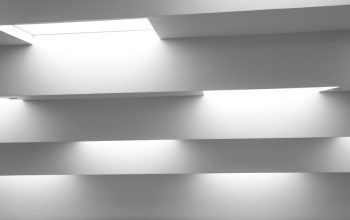
Looking to make your wall washer lighting more energy-efficient? The quickest path involves choosing LED fixtures, optimizing their placement and beam angles, and implementing smart controls. These strategies, when combined, significantly reduce power consumption without sacrificing the dramatic visual effect wall washers provide.
Understanding Wall Washer Lighting Efficiency
Wall washer lighting is designed to illuminate a vertical surface evenly, creating a smooth, uniform wash of light that highlights textures or makes a space feel larger. While aesthetically pleasing, traditional wall washer solutions can be energy intensive. Efficiency here means achieving the desired lighting effect using the least amount of electricity. This isn’t just about saving money; it also contributes to a lower carbon footprint and reduces heat load in a space, potentially saving on air conditioning costs too. The journey to efficient wall washing involves understanding the components, the physics of light distribution, and the practical application of technology.
What Makes Wall Washers Unique?
Unlike spotlights that create defined beams or downlights that illuminate a floor area, wall washers aim for broad, even coverage on a wall. This requires specific optics and careful aiming. The light source is typically mounted close to the wall, often at the ceiling line or recessed into the floor, angled to spread light across the entire surface. The goal is to eliminate hot spots (areas of intense brightness) and dark zones, achieving a seamless glow. This specialized distribution means that simple lumen output isn’t the only metric; how those lumens are distributed is paramount to efficiency and effect.
Why Efficiency Matters Beyond Cost
Beyond the obvious financial savings on your electricity bill, energy-efficient wall washer lighting brings several other benefits. Environmentally, it reduces the demand on power grids, leading to less fossil fuel consumption and lower greenhouse gas emissions. For businesses, it can contribute to green building certifications and enhance a company’s sustainability image. Operationally, more efficient fixtures often generate less heat, which can extend the lifespan of the fixture itself and reduce the workload on HVAC systems, especially in environments with many light sources. Lower heat also means a more comfortable environment for occupants.
The Role of LED Technology
LEDs have revolutionized lighting, and wall washing is no exception. Their inherent efficiency, longevity, and control capabilities make them the undeniable choice for modern, energy-saving wall washer solutions. Swapping out older technologies for LEDs is often the single most impactful step you can take.
Core Advantages of LEDs for Wall Washing
LEDs convert a much higher percentage of electrical energy into light compared to incandescent or halogen lamps, which waste a lot of energy as heat. This translates directly into lower power consumption for the same light output. Furthermore, LEDs have incredibly long lifespans—often tens of thousands of hours—meaning fewer replacements and reduced maintenance costs. Their compact size allows for innovative fixture designs that can precisely control light distribution, crucial for effective wall washing.
Comparing LEDs to Traditional Sources
Let’s put it into perspective. A traditional incandescent wall washer might consume 50-75 watts to produce a certain light level, while a comparable LED fixture could achieve the same effect with only 10-20 watts. Halogen lamps, while more efficient than incandescent, still lag significantly behind LEDs. Fluorescent tubes, though somewhat efficient, often struggle to achieve the precise beam control and directional output needed for quality wall washing without bulky reflectors. The immediate power savings with LEDs are substantial and compound over time.
LED Color Temperature and Quality Considerations
While efficiency is key, the quality of light is equally important. LEDs offer a wide range of color temperatures, from warm white (2700K-3000K) to cool white (4000K-5000K) and beyond. Choosing the right color temperature impacts the mood and appearance of the illuminated surface. High Color Rendering Index (CRI) LEDs are crucial for accurately rendering the colors of the wall or artwork it’s illuminating. A CRI of 80 or higher is generally recommended for good color representation. Poor quality LEDs, while cheap, can suffer from color shifting over time or inconsistent color across fixtures, undermining the uniform effect desired from wall washing.
Strategic Fixture Placement and Optics
Beyond the light source itself, how and where the fixtures are installed, along with their optical design, plays a massive role in overall efficiency. Even the most efficient LED can be wasteful if it’s poorly aimed or improperly spaced.
Optimal Fixture Distance from the Wall
The distance of the wall washer fixture from the wall is critical. Generally, a closer distance (e.g., 6-12 inches for ceiling-mounted fixtures) creates a more dramatic, grazing effect that highlights texture, while a greater distance (e.g., 18-36 inches) provides a softer, more even wash of light. The “sweet spot” depends on the wall height, the fixture’s beam angle, and the desired effect. Too close, and you might get scallops (uneven light patterns); too far, and the light might not reach the top of the wall effectively or might spill onto the floor. Experimentation or professional consultation is often necessary to find the ideal placement.
Understanding Beam Angles and Distribution
Different wall washer fixtures come with various beam angles – the spread of light they produce. For efficient wall washing, you want a fixture with an asymmetric or very wide flood beam that pushes light up and across the wall evenly. A narrow beam might create hot spots or streaks, requiring more fixtures to compensate. Some advanced wall washers use specialized lenses or reflectors to sculpt the light distribution, ensuring that light is directed precisely where it’s needed and minimizing spill into unoccupied areas. Understanding the photometric data (light distribution curves) provided by manufacturers is key to selecting the right optic for your specific wall and ceiling height.
Recessed vs. Surface-Mounted vs. Track Systems
The mounting method also impacts efficiency and aesthetic. Recessed wall washers provide a clean, integrated look, often disappearing into the ceiling or floor. However, they require careful planning during construction and can be more challenging to adjust post-installation. Surface-mounted fixtures offer more flexibility in aiming but are more visible. Track systems combine the best of both worlds, allowing for easy repositioning and aiming of individual wall washer heads along a track. The choice depends on architectural considerations, budget, and the desired level of flexibility. Regardless of the mounting, ensuring the fixture is angled correctly is paramount to prevent light from being wasted.
Spacing and Coverage Uniformity
The spacing between wall washer fixtures is another critical factor. Too far apart, and you’ll get dark spots or “scallops” between fixtures. Too close, and you’re over-lighting the wall and wasting energy. The ideal spacing depends heavily on the beam angle of the fixture, its distance from the wall, and the wall height. Manufacturers often provide spacing guidelines based on photometric testing. The goal is to achieve a uniform illuminance level across the entire wall surface, typically within a 3:1 average-to-minimum uniformity ratio for a pleasing effect. Achieving this uniformity with fewer fixtures, spaced optimally, is the epitome of efficient wall washing.
Smart Controls for Dynamic Efficiency
Even the most efficient LED fixtures can waste energy if they’re left on when not needed or run at full brightness unnecessarily. Smart controls provide the intelligence to optimize energy use further, adapting lighting to real-time needs.
Dimming Capabilities (0-10V, DALI, DMX)
LEDs are inherently dimmable, offering a range of control protocols. 0-10V dimming is a common and relatively simple analog system, allowing for smooth intensity adjustments. DALI (Digital Addressable Lighting Interface) is a more advanced digital protocol that allows individual control of fixtures or groups, providing greater flexibility and potential for energy savings through precise zoning. DMX (Digital Multiplex) is primarily used for color-changing or dynamic architectural lighting but can also control intensity. Implementing dimming allows you to adjust the light output to the exact level required, rather than always running at 100%, which can lead to significant energy savings over time. For wall washing, subtle dimming can often achieve the desired ambiance with less power.
Occupancy and Vacancy Sensors
Why light a wall if no one is there to see it? Occupancy sensors detect movement and automatically turn lights on when someone enters a space, and turn them off after a period of inactivity. Vacancy sensors require manual activation but automatically turn lights off when a space is empty. Integrating these sensors with your wall washer system ensures that light is only provided when and where it’s needed, preventing unnecessary energy consumption in unoccupied areas. This is particularly useful in hallways, lobbies, or conference rooms that are not constantly in use.
Daylight Harvesting Systems
If your wall-washed surface is near a window or skylight, daylight harvesting can be a powerful energy-saving tool. These systems use photocells to measure the amount of natural light entering a space. When sufficient daylight is available, the wall washer lights can be automatically dimmed or turned off, supplementing or replacing artificial illumination. This not only saves energy but also enhances the natural feel of the space. Calibration is important to ensure a seamless transition between artificial and natural light, avoiding noticeable changes in light levels.
Scheduling and Scene Setting
Programmable schedules allow you to automate when your wall washers turn on, turn off, and dim throughout the day or week. For instance, lights in an office lobby might be set to come on at 8 AM, dim down in the evening, and turn off overnight. Scene setting takes this further, allowing you to pre-program different lighting configurations (e.g., “Daytime Bright,” “Evening Ambiance,” “Presentation Mode”) that can be activated with a single touch. This prevents over-lighting by ensuring the exact appropriate light level for specific activities or times of day, reducing reliance on manual adjustments that might be forgotten.
Maintenance and Long-Term Efficiency
Even with the best initial setup, ongoing maintenance and periodic review are essential to ensure your wall washer lighting system continues to operate at peak efficiency throughout its lifespan.
Regular Cleaning of Fixtures and Walls
Dust and grime can accumulate on fixture lenses, reflectors, and even the wall surface itself. This build-up can significantly reduce light output and uniformity. A dirty lens can absorb light, making the fixture less efficient and requiring higher power settings to achieve the desired illumination. Regularly cleaning the fixture’s optics with a soft, dry or slightly damp cloth (following manufacturer guidelines) can restore light output and maintain efficiency. Similarly, a clean wall reflects light more effectively than a dusty one, enhancing the overall lighting effect without needing more power.
Monitoring System Performance
Keep an eye on your lighting system’s performance. Are certain areas appearing dimmer than others over time? Are any fixtures flickering or showing inconsistent color? These can be signs of declining efficiency or impending failure. For smart systems, regularly check energy consumption reports to identify any unexpected spikes that might indicate an issue. Proactive monitoring allows for timely intervention, addressing minor issues before they become major problems that impact efficiency or require more costly repairs.
Firmware Updates for Smart Controls
If you’re using advanced smart control systems (DALI, DMX, or networked systems), ensure that their firmware is kept up to date. Manufacturers frequently release updates that improve performance, enhance compatibility, fix bugs, and sometimes even introduce new energy-saving features. Staying current with firmware can extend the life and efficiency of your control system, ensuring it continues to operate optimally with your LED wall washers.
Phased Upgrades and Retrofitting
If you have an older wall washer system, a full overhaul might not be immediately feasible. Consider a phased upgrade approach. Start by replacing the least efficient fixtures (e.g., incandescent or halogen) with LED equivalents. Over time, as budget allows, you can transition to more advanced LED fixtures with better optics and integrate smart controls. Many existing fixtures can also be retrofitted with LED lamps, which is a simpler step towards efficiency, though not always as effective as a purpose-built LED fixture. Developing a long-term plan for modernization ensures continuous improvement in energy efficiency.
Life Cycle Assessment
When making future purchasing decisions for wall washer lighting, consider not just the upfront cost and immediate energy savings, but also the total life cycle cost. This includes the cost of the fixture, installation, energy consumption over its expected lifespan, and maintenance (including lamp replacements). High-quality, energy-efficient LED fixtures often have a higher initial cost but deliver significant savings over their extended operational life, making them the more economical and environmentally friendly choice in the long run.