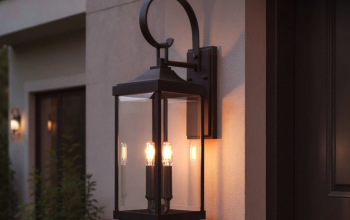
Thinking about upgrading your porch light? A smart dusk-to-dawn sensor porch wall light might be exactly what you need. These lights automate your outdoor illumination, turning on when it gets dark and off when the sun rises, all without you having to lift a finger. It’s not just about convenience; it enhances security and can even save you a little on your electricity bill.
Why Opt for a Smart Dusk-to-Dawn Sensor Light?
So, what makes these lights stand out from your standard porch fixture? The “smart” part is key. It’s not just a timer; it’s an integrated sensor that reacts to ambient light levels.
The Core Convenience Factor
Honestly, the biggest draw is not having to remember to switch lights on and off. Whether you’re rushing out the door in the morning or settling in for the evening, the light handles itself.
- Effortless Operation: No more fumbling for switches in the dark. The light just works.
- Peace of Mind: You don’t have to worry about leaving lights on all night unnecessarily.
Enhanced Security
This is where the practical benefits really kick in. A well-lit porch can deter potential intruders.
- Deterrent Effect: Darkness can provide cover. Visible light makes your property less appealing as a target.
- Visible Presence: The light signals that the house is occupied, even if you’re not home.
Energy Savings
While not massive, there are definite savings to be had by cutting out wasted electricity.
- No Wasted Power: The light only operates when it’s actually needed.
- Reduced Bulb Lifespan Strain: Less on-time can potentially extend the life of your bulbs, especially if you’re using traditional incandescent bulbs (though LED is the way to go these days).
Understanding the Technology: What’s Inside?
The “smart” in these lights comes from their internal components. It’s not magic; it’s a bit of clever engineering.
The Dusk-to-Dawn Sensor Explained
This is the brain of the operation. The sensor detects changes in light intensity.
- Photocell Technology: Most use a photocell, which is a light-dependent resistor. As light fades, the resistance decreases, triggering the light to turn on. As light increases, the resistance goes up, turning it off.
- Sensitivity Settings: Some advanced models allow you to adjust the sensitivity, so you can fine-tune exactly when the light activates relative to sunset and sunrise.
Beyond Basic On/Off: Advanced Features
Modern smart lights offer more than just simple automation.
- Motion Detection Integration: Many combine dusk-to-dawn functionality with motion sensors. The light stays dim or off until motion is detected, then brightens. This is a great way to save energy and provide targeted illumination.
- Wi-Fi Connectivity and App Control: The “smart” aspect can extend further. Wi-Fi enabled lights can often be controlled via a smartphone app.
Key Features to Look For in a Smart Porch Light
Not all smart dusk-to-dawn porch lights are created equal. Here’s what to consider when you’re shopping.
Light Output and Brightness (Lumens)
Brightness is crucial for both aesthetics and security. Think about the size of your porch and surrounding area.
- Lumens Defined: Lumens measure the total amount of visible light emitted by a source. More lumens mean a brighter light.
- Appropriate Brightness: For a standard porch, 600-1100 lumens is often sufficient. Larger areas might benefit from higher output. Too bright can be glaring and unwelcoming, though.
Durability and Weather Resistance
This is an outdoor fixture, so it needs to stand up to the elements.
- IP Ratings: Look for Ingress Protection (IP) ratings. An IP65 rating, for example, means it’s protected against dust and powerful water jets.
- Material Quality: Consider materials like rust-resistant aluminum or stainless steel, and impact-resistant glass or polycarbonate.
Style and Design Aesthetics
While functionality is paramount, the light also contributes to your home’s curb appeal.
- Matching Your Home: Think about the architectural style of your house. Do you have a modern, traditional, farmhouse, or craftsman home?
- Finish Options: Lights come in various finishes like black, bronze, brushed nickel, or white. Choose one that complements your exterior paint and trim.
Bulb Type and Energy Efficiency (LED)
This is non-negotiable in today’s market.
- LED Dominance: Always opt for LED bulbs. They consume significantly less energy than incandescent or halogen bulbs, last much longer, and produce less heat.
- Integrated vs. Replaceable LED: Some lights have integrated LED chips, meaning the entire unit needs replacing if the LED fails (though this is rare and often has long warranties). Others use standard screw-in LED bulbs, offering more flexibility.
Ease of Installation
Unless you’re a seasoned DIYer, consider how easy it is to install.
- Hardwired vs. Plug-in: Most porch lights are hardwired into your home’s electrical system. If you’re not comfortable with electrical work, you’ll need an electrician. Some battery-operated or solar options exist but are less common for primary porch lighting.
- Mounting Hardware: Ensure the light comes with all necessary mounting hardware.
Installation and Setup: What to Expect
Getting your smart porch light up and running is usually straightforward, especially if you’re replacing an existing fixture.
Safety First: Power Off!
This is the most critical step. Always ensure the power to the existing light fixture is turned off before you start.
- Circuit Breaker Check: Locate the circuit breaker that controls your porch light and flip it off. Double-check with a voltage tester to be absolutely sure.
Replacing an Existing Light Fixture
If you’re swapping out an old fixture, the process is generally similar.
- Removing the Old Fixture: Unscrew the old light, disconnect the wiring (usually black to black, white to white, and ground to ground), and remove the mounting bracket.
- Mounting the New Bracket: Install the new mounting bracket provided with your smart light.
- Connecting the Wires: Connect the wires of the new light to your home’s wiring, following the manufacturer’s instructions. Red usually connects to red on the house wiring if you have multiple circuits, but for a single porch light, it’s typically black to black. Ensure the ground wire (bare copper or green) is connected securely.
- Attaching the Fixture: Secure the new light fixture to the mounting bracket.
Testing and Calibration
Once everything is connected and the power is back on, it’s time to test.
- Initial Power On: Turn the breaker back on.
- Sensor Check: Observe if the light turns on as dusk approaches. For immediate testing, you can cover the sensor with your hand to simulate darkness.
- App Setup (if applicable): If your light is Wi-Fi enabled, follow the app’s instructions to connect it to your home network and configure any settings.
Maintenance and Longevity
Even smart lights need a little occasional attention to keep them working optimally.
Cleaning the Sensor
The sensor needs a clear view to function correctly.
- Gentle Wipes: Periodically, a quick wipe with a soft, damp cloth can remove dust, pollen, or cobwebs that might interfere with the sensor’s accuracy. Avoid harsh chemicals.
Bulb Replacement (if applicable)
While LEDs are long-lasting, they aren’t immortal.
- Check Manufacturer Specs: If your light uses replaceable LED bulbs, refer to the manual for the recommended bulb type and wattage.
- Power Off Reminder: Again, always turn off the power at the breaker before attempting to replace a bulb.
Firmware Updates (for connected lights)
For app-controlled lights, keeping the firmware up-to-date is a good idea.
- Automatic Updates: Many smart devices offer automatic firmware updates, but it’s worth checking the app periodically to ensure you’re running the latest version. These updates often bring performance improvements or new features.
Smart Dusk-to-Dawn Lights Beyond the Porch
The technology isn’t limited to just your front porch.
Garden and Landscape Applications
Use these sensors to illuminate pathways, features, or seating areas in your garden.
- Pathway Lighting: Ensure guests can safely navigate your garden paths after dark.
- Accent Lighting: Highlight specific plants, sculptures, or architectural elements.
Driveway and Garage Lighting
Improve visibility and security along your driveway and around the garage.
- Driveway Illumination: Makes it easier to park your car and see any obstructions.
- Garage Entrance: Provides a welcoming and secure entry point.
Security Perimeter Lighting
Strategically placed lights can cover wider areas.
- Property Lines: deterring unwanted visitors.
- Barns or Sheds: Securing outbuildings.
Will a Smart Dusk-to-Dawn Porch Light Suit Your Needs?
If you’re looking for a straightforward way to automate your home’s exterior lighting, add a layer of security, and potentially save a bit of energy without requiring complex programming, then yes, a smart dusk-to-dawn sensor porch wall light is a very practical upgrade. They offer a set-it-and-forget-it solution that genuinely enhances the usability and appeal of your home’s exterior.